
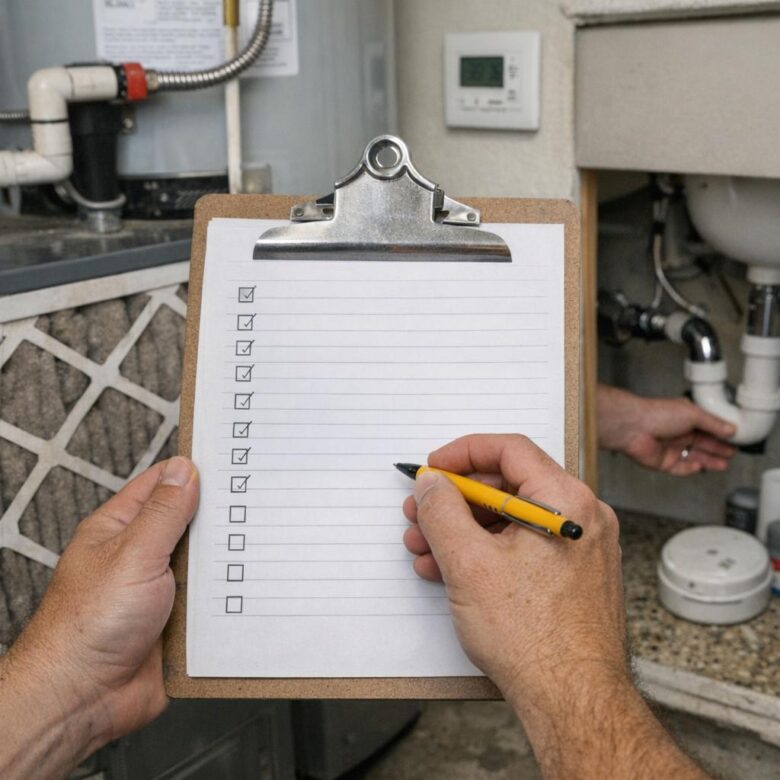
Monthly maintenance is not about repairing the entire home in one weekend. It is a short inspection that helps you notice leaks, unusual smells, blocked airflow, damaged cords, moisture, and other changes while they are still easier to investigate.
A practical routine should cover the areas where small problems often remain hidden: below sinks, around plumbing connections, near heating and cooling equipment, behind appliances, around windows, and outside where rainwater moves away from the building.
The checklist below is designed for homeowners, renters, and anyone responsible for observing the condition of a home. It focuses on safe visual checks and simple tasks rather than advanced repairs.
Use the checklist to observe, not to attempt every repair
A monthly inspection helps you recognize what has changed. It does not mean that you should open electrical equipment, dismantle appliances, climb onto a roof, work on gas lines, or continue with a task that feels unsafe.
Ask one question when you notice a problem
Is this safe to observe, safe to handle with basic maintenance, or something that requires qualified help? When the answer is unclear, stop and obtain professional guidance.
Gas odor, sparks, active flooding, sewage backup, burning smell, sagging ceiling, or another immediate hazard.
Recurring leak, warm outlet, repeated breaker trip, spreading stain, damaged roof area, or persistent drainage problem.
Small cosmetic crack, minor wear, faint noise, or another change with no immediate sign of danger.
Stop the inspection when there is an immediate safety concern
Leave the affected area and contact the appropriate emergency service, utility provider, property manager, or qualified professional when you smell gas, see sparks, hear electrical arcing, find active flooding near electricity, suspect carbon monoxide, or notice a structural area that appears unstable.
Your interactive monthly home checklist
Open each section and check off the tasks as you move through the home. Progress is saved in the browser on the device you are using, making it easier to pause and return later.
Monthly inspection progress
Complete only the checks that apply to your home and that can be performed safely.
0 of 25 checks completed
Safety alarms and visible electrical conditions
Water, plumbing, bathrooms, and moisture
Heating, cooling, ventilation, and indoor air
Kitchen, laundry, appliances, and storage
Exterior, drainage, access points, and general condition
A simple route prevents forgotten areas
Following the same path each month makes the inspection faster and gives you a consistent way to compare changes. Start where the home’s safety controls and utilities are located, then move through wet rooms, living areas, and the exterior.
- Begin with alarms and utility access Test applicable alarms, confirm that panels and shutoffs are accessible, and observe the areas around major equipment.
- Visit every room with plumbing Check below sinks, around toilets, near appliances, and along surfaces where water could collect unnoticed.
- Walk through living and sleeping areas Look at ceilings, walls, windows, floors, outlets, vents, and visible cords while listening for changes.
- Review laundry and storage spaces These areas often hide lint, leaks, pests, blocked equipment, or items stored too close to heat sources.
- Finish with a ground-level exterior walk Check drainage, walls, doors, windows, steps, vegetation, and the roof from a safe position.
Use three senses during the room-by-room sweep
Look
Search for stains, cracks, condensation, peeling paint, rust, damaged seals, loose hardware, pest signs, or materials that have changed shape.
Listen
Notice buzzing, dripping, rattling, short cycling, scratching, water movement, or appliance sounds that are different from normal operation.
Smell
Take musty, burning, sewage, chemical, or gas-like odors seriously. Do not use fragrance to hide an odor before finding its source.
What common warning signs may be telling you
| What you notice | Possible areas to investigate | Safer first response |
|---|---|---|
| New ceiling or wall stain | Roof, plumbing, bathroom above, condensate line, window, or previous moisture damage | Photograph it, check whether it feels damp, and investigate the moisture source before repainting. |
| Musty odor | Leak, poor ventilation, wet materials, hidden moisture, or mold growth | Look for moisture and improve safe ventilation. Address the water source rather than masking the smell. |
| Weak airflow | Dirty filter, blocked vent, closed damper, fan issue, or duct problem | Check the filter and visible vents. Request service when airflow remains weak or the system behaves abnormally. |
| Warm outlet or buzzing | Loose connection, overloaded circuit, damaged device, or electrical fault | Stop using the affected outlet or device and arrange an electrical evaluation. |
| Water near an appliance | Supply hose, drain, seal, condensation, internal leak, or nearby plumbing | Stop the water source when this can be done safely and protect the surrounding area while arranging repair. |
| Several slow drains | Shared drain restriction, venting issue, or larger plumbing problem | Avoid repeated chemical drain treatment and contact a plumber when the problem continues. |
Moisture checks deserve extra attention
Water damage can begin inside a cabinet, behind an appliance, below a fixture, or along a ceiling before it becomes obvious in the center of a room. A monthly routine should focus on changes rather than waiting for standing water.
Look for early clues
- Swollen cabinet material
- Discolored grout or caulk
- Peeling or bubbling paint
- Rust around connections
- Soft flooring or trim
- Recurring condensation
- Musty odors
- Stains that change after rain
What to do when you find moisture
- Identify and stop the source when it is safe and within your responsibility.
- Protect nearby belongings and electrical equipment.
- Photograph the area before cleaning or repair.
- Dry affected materials promptly when this can be done safely.
- Report the issue to the property manager when you rent.
- Request qualified help for concealed, recurring, or widespread damage.
Cleaning a stain is not the same as fixing its cause
Moisture control is central to preventing recurring mold problems. Painting over a water mark, adding new caulk over damaged material, or cleaning visible growth without addressing the leak may allow the problem to return.
How to review the home’s main systems safely
Heating and cooling
Basic observation includes checking the air filter, keeping vents clear, and noticing new odors, weak airflow, unusual cycling, or water near the equipment.
- Follow the equipment and filter instructions.
- Do not open sealed panels.
- Leave refrigerant, burners, wiring, and internal controls to qualified technicians.
Plumbing
Watch visible supply lines, drains, fixtures, toilet connections, and appliance hoses for leaks, movement, staining, corrosion, or unusual odors.
- Know how to report or stop an emergency leak.
- Do not ignore water entering walls or floors.
- Request help for sewage odors and recurring backups.
Appliances
Observe normal operation rather than dismantling the appliance. Changes in sound, heat, drainage, odor, sealing, or cycle performance can justify service.
- Review visible hoses and connections.
- Keep ventilation openings clear.
- Follow manufacturer cleaning schedules.
Electrical and gas
Monthly checks should remain visual. Warmth, burning odors, sparks, damaged cords, repeated breaker trips, and suspected gas leaks require prompt attention.
- Do not remove panel covers.
- Do not work on live wiring.
- Leave the area when a gas leak is suspected.
Not every task belongs on a monthly schedule
A useful checklist separates quick observations from seasonal service and specialist work. Performing unnecessary tasks too frequently can waste materials, damage equipment, or create false confidence.
Review monthly
- Visible leaks and moisture
- Alarm testing as directed
- HVAC filter condition
- Blocked vents and access points
- Dryer lint and visible vent area
- Unusual sounds, smells, or stains
Plan seasonally
- Gutter cleaning when needed
- Weather-seal review
- Heating or cooling preparation
- Exterior drainage review
- Seasonal pest prevention
- Outdoor equipment preparation
Schedule professionally
- Advanced HVAC service
- Gas appliance service
- Roof repair and unsafe access
- Electrical diagnosis
- Structural evaluation
- Major mold or water remediation
Document changes instead of relying on memory
A small issue log helps you explain what happened when you contact a contractor, landlord, insurer, appliance technician, or property manager. It also helps you see whether a crack, stain, sound, or leak is changing over time.
A useful maintenance note includes four details
When the problem was first noticed and when it returned.
The exact room, fixture, wall, appliance, or exterior area.
What you saw, heard, smelled, or felt without guessing at the cause.
Whether it appeared after rain, appliance use, heating, cooling, or plumbing activity.
Take a clear photo from the same position each time when monitoring a visible change. Avoid marking, touching, or disturbing a potentially unsafe area simply to obtain a better picture.
Common maintenance mistakes that create more work
Waiting until damage is obvious.
Small stains, recurring odors, slow leaks, and unusual noises are easier to investigate before they spread or become part of the normal background.
Covering symptoms instead of finding the source.
Paint, fragrance, additional caulk, and surface cleaning should not replace an investigation of moisture, drainage, electrical, or ventilation problems.
Replacing every filter on the same schedule.
Filter type, system design, use, dust, pets, and manufacturer instructions vary. Inspect regularly and follow the correct guidance for your equipment.
Climbing onto the roof for a routine check.
Many warning signs can be observed from the ground. Roof access introduces fall risk and may damage roofing materials.
Letting storage block important equipment.
Electrical panels, HVAC equipment, water shutoffs, exits, and utility areas should remain reachable.
Monthly maintenance for renters
Renters may not be responsible for repairing the building, but they can still notice and report problems early. Avoid unauthorized repairs that could affect the lease, building systems, insurance, or safety.
What renters can observe
- Leaks and moisture
- Alarm problems
- Damaged outlets or fixtures
- Mold-like growth or musty odors
- Pest activity
- Appliance problems provided with the property
- Blocked drainage or ventilation
How to report a problem clearly
- Use the reporting method required by the lease.
- Include the exact location and date.
- Describe what happened without guessing.
- Attach photographs when appropriate.
- Keep a copy of the communication.
- Follow emergency instructions for urgent hazards.
When professional help is the safer next step
The purpose of an inspection is to identify a concern early, not to prove that you can repair it alone. Contact an appropriately qualified professional when the problem involves:
- Repeated breaker trips, sparking, warm outlets, buzzing panels, or burning odors.
- Suspected gas leaks, fuel-burning equipment, or damaged venting.
- Active flooding, concealed leaks, sewage backup, or water near electricity.
- Roof damage, unsafe ladder access, or water entering through the roof.
- Structural movement, significant cracks, sagging, or unstable surfaces.
- Recurring or widespread mold growth and unresolved moisture.
- Heating or cooling failures involving internal electrical, refrigerant, or combustion components.
- Any work requiring permits, licensing, specialized testing, or safety equipment.
Do not wait for the next monthly inspection
A checklist is a routine, not a reason to postpone action. Investigate active leaks, electrical heat, gas odors, alarm failures, sewage problems, and other urgent warning signs as soon as they are discovered.
Frequently asked questions
Does every item on this checklist apply to every home?
No. Apartments, houses, rentals, older properties, and homes with different heating, cooling, fuel, plumbing, and exterior systems require different checks. Use only the sections that apply and follow the instructions for the equipment installed in your home.
Should an HVAC filter always be replaced every month?
Not necessarily. The filter should be inspected regularly, but its replacement schedule depends on the filter, equipment, household conditions, and manufacturer guidance. Replace or clean it when required rather than assuming every filter has the same lifespan.
How should I monitor a small water stain?
Photograph the stain, record the date, and note whether it appears after rain, bathing, plumbing use, or HVAC operation. Investigate the moisture source before painting. Arrange help promptly when the stain grows, feels wet, smells musty, or appears near electrical equipment.
Is this checklist useful for a newly built home?
Yes. New homes can still develop leaks, drainage problems, appliance issues, settling changes, damaged seals, or installation defects. Keep warranty information and report concerns within the required warranty period.
What is the most important monthly maintenance habit?
Consistency is more useful than trying to complete a large repair project once a year. Following the same route, documenting changes, and responding promptly to safety or moisture concerns helps you understand what is normal for the home.
A good checklist makes changes easier to notice
Monthly home maintenance should be short enough to repeat and clear enough that another person in the household could follow the same route.
Begin with alarms and utility access, review wet rooms and equipment areas, scan living spaces for visible changes, and finish with a safe exterior walk. Record anything unusual and separate routine maintenance from work that requires a qualified professional.
The goal is not to find something wrong every month. The goal is to understand the home’s normal condition well enough to recognize when something changes.
Official resources used for safety guidance
- National Fire Protection Association: smoke alarm guidance
- Centers for Disease Control and Prevention: carbon monoxide safety
- ENERGY STAR: heating and cooling maintenance checklist
- U.S. Environmental Protection Agency: mold, moisture, and home guidance
- U.S. Fire Administration: appliance and electrical fire safety
Editorial note: This guide was prepared by the Dona Living Editorial Team for general educational purposes. It is intended to support observation and routine planning, not professional inspection or repair. Follow local requirements and manufacturer instructions, and obtain qualified assistance for electrical, gas, structural, roofing, mold, HVAC, and major plumbing concerns.

Dona Living Editorial Team creates practical, well-researched content about home organization, cleaning, décor, and smart living. Our goal is to help readers make everyday life at home simpler, more comfortable, and more efficient through clear guides, realistic ideas, and useful solutions.