
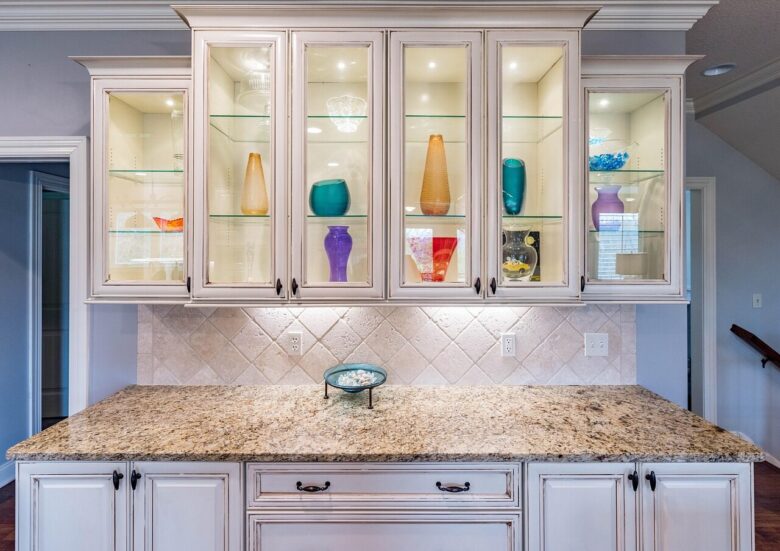
More cabinet space is often created by reducing unnecessary movement rather than fitting more objects onto every shelf.
A kitchen feels crowded when daily dishes are hidden behind serving pieces, pans must be lifted from unstable stacks, open food disappears in deep cabinets, and several household members return items to different places.
The goal is not to make every shelf look full. It is to give frequently used items direct access, keep heavy objects stable, prevent food and supplies from being forgotten, and leave enough room to return clean dishes without reorganizing the cabinet again.
Empty one cabinet or category—not the entire kitchen
A contained project can be cleaned, reviewed, and restored before the next meal. Emptying every cabinet at once may block counters and floors while making it harder to compare what genuinely belongs together.
Ask six questions before buying an organizer
What repeatedly becomes difficult?
Name the exact problem: falling lids, hidden cans, crowded mugs, unstable pans, unreachable appliances, or mixed cleaning products.
How often is the category used?
Daily dishes need direct access. Holiday serving pieces can tolerate a less convenient but still safe position.
How heavy is it when full?
A lightweight empty bin can become difficult to lift when filled with cans, glass jars, dishes, cookware, or small appliances.
Who must reach it?
Height, grip, vision, mobility, age, supervision, and shared-household routines affect the correct shelf and container.
What must move around it?
Cabinet doors, drawers, pipes, hinges, shelves, appliances, and neighboring organizers need room to operate.
Does it require protection?
Cleaning products, sharp tools, breakable dishes, confidential papers, medication, and certain foods may require controlled access or special conditions.
Organizing cannot compensate for excess volume
A riser, basket, turntable, or divider may improve access, but it cannot make an unlimited category functional. Remove damaged equipment, unmatched pieces, unwanted duplicates, spoiled food, and products the household will not realistically use before measuring organizers.
Plan one cabinet before moving anything
Choose the cabinet, category, frequency of use, and main user. The planner suggests a storage format and highlights the most important measurement or safety check.
Build activity zones around the way the kitchen is used
A cabinet zone is useful when it reduces walking, reaching, and searching during an ordinary task. Zones do not need to be perfectly symmetrical or limited to one cabinet.
Everyday tableware
Store frequently used plates, bowls, cups, and glasses near the dishwasher, drying area, or table when the layout permits.
Mixing and cutting
Keep cutting boards, mixing bowls, measuring tools, and preparation utensils near the clearest work surface.
Heat-related tools
Place appropriate cookware, utensils, oils, and seasonings near the cooking area without crowding heat sources or blocking ventilation.
Repeated morning use
Group mugs, cereal, tea, coffee supplies, and permitted appliances where the morning routine actually occurs.
Pantry and leftovers
Keep open products visible, group similar foods, and make older items easier to reach before new packages are opened.
Tools and supplies
Keep suitable cleaning tools near the sink while securing hazardous products according to their labels and household needs.
Shared-kitchen rule: categories should be understandable without one person explaining the system. Broad labels such as “breakfast,” “baking,” “lunch supplies,” and “food containers” are often easier to maintain than many narrow subcategories.
Measure the cabinet as a working space
Interior dimensions are only the beginning
A product may technically fit inside the cabinet while preventing a door from closing, colliding with a hinge, blocking plumbing, or becoming too heavy to remove.
Measure between hinges, frames, shelf supports, pipes, and any internal hardware—not only the opening.
Include the item placed on the riser or turntable. Adjustable shelves may have limited pin positions.
Account for the closed door, handles, plumbing, cords, and the space needed to grasp or pull the container forward.
Open neighboring cabinets, drawers, appliances, and organizers before deciding where a pull-out or rack can operate.
Follow the cabinet, shelf, organizer, fastener, and pull-out system limits. Heavy cookware can overwhelm weak or damaged shelving.
Test before buying multiples: use one organizer in the busiest cabinet for several days. Confirm that it slides, turns, cleans, clears the door, and remains useful when fully loaded before purchasing matching pieces for the entire kitchen.
Choose cabinet height according to access and weight
Daily and lightweight
Everyday dishes, frequently used food, mugs, small bowls, and routine tools belong where the main user can see and retrieve them without stretching.
Heavy and stable
Pots, pans, mixing bowls, larger appliances, and other heavy objects are generally easier to manage in stable lower storage.
Light and occasional
Lightweight serving pieces, backup supplies, and infrequently used objects may use higher shelves when retrieval remains safe.
Protected access
Cleaning chemicals, sharp objects, breakable collections, and products requiring controlled access need storage based on safety—not convenience alone.
Do not discard shelf-stable food based on a date alone
Many package dates describe expected quality rather than an automatic safety deadline. In the United States, the USDA states that, except for infant formula, product dates generally are not indicators of food safety.
Read the wording
“Best if Used By” commonly relates to quality. Follow any specific safety, storage, refrigeration, or infant-formula instructions on the product.
Inspect the package
Dispose of food with signs of spoilage, contamination, pests, leakage, unusual odor, damaged seals, or unsafe package changes.
Review how it was kept
Temperature, moisture, opening, contamination, and product-specific instructions matter more than cabinet appearance.
Organize pantry cabinets for visibility and rotation
| Pantry problem | Useful starting method | What to avoid | Completion test |
|---|---|---|---|
| Several open packages | Create one visible “use first” zone | Hiding older products behind new purchases | The household can see which package should be finished first. |
| Deep shelf | Use a pull-out bin for one lightweight category | Mixing cans, packets, glass jars, and loose items in one heavy box | The entire category can be pulled forward without unloading it. |
| Short cans or jars | Use a stable shelf riser where both levels remain visible | Creating a hidden lower row or unstable tower | Every item can be identified from the cabinet opening. |
| Small packets | Use a shallow, labeled container | Using a deep bin that hides expired, damaged, or open packets | The category remains visible and easy to review. |
| Bulk purchases | Confirm consumption rate and storage conditions first | Buying more than the cabinet can hold or the household will use | New stock fits without blocking older food. |
Decanting is optional, not automatically more organized
Transferring food into another container may improve stacking or visibility when the container is food-appropriate, clean, dry, and clearly labeled.
Keep preparation instructions, allergen information, lot details, date information, and cooking guidance available when they are still needed. Do not pour new food on top of an old unidentified remainder simply to make a container look full.
Give awkward categories their own storage logic
Daily tableware should be easy to unload, retrieve, and return. A slightly smaller collection often works better than a perfectly fitted but overfilled shelf.
- Keep the daily set in the most comfortable access zone.
- Separate plates and bowls with a riser when one tall stack is difficult to lift.
- Avoid hanging mug hooks unless the cabinet material, fastener, clearance, and handle shape are suitable.
- Move seasonal and sentimental dishes away from prime everyday storage.
- Leave enough open shelf area to return clean dishes without rearranging the cabinet.
Containers become manageable when the household keeps compatible pieces, limits shapes, and can match each base with a usable lid.
- Match containers and lids before choosing a storage format.
- Remove cracked, warped, damaged, or no-longer-usable pieces according to local disposal options.
- Nest only compatible shapes that separate easily.
- Store lids vertically or in a shallow bin when that makes matching faster.
- Avoid forcing several lid systems into one narrow category when the pieces are visually similar but incompatible.
Cookware needs stable storage that respects its weight, handles, coatings, and the physical effort required to lift it.
- Place the heaviest pieces on a stable lower shelf or drawer designed for the load.
- Stack only when surfaces are protected and the most-used pan is not trapped at the bottom.
- Use a vertical rack only when it supports the loaded weight without tipping or flexing.
- Store lids in a stable divider, suitable door rack, or near the cookware they serve.
- Do not use cabinet pipes, weak shelf pins, or improvised hooks as cookware supports.
Wide flat items often use less practical space when stacked horizontally because the required piece is usually underneath another one.
- Use vertical dividers when the cabinet height, width, and loaded stability permit it.
- Group cutting boards separately from hot bakeware and serving trays when their use differs.
- Keep heavy cast-iron or stone pieces in a lower supported position.
- Leave enough width to remove one tray without scraping neighboring pieces.
- Do not overload a narrow rack simply because another slot remains visible.
Appliance storage should account for weight, cord condition, ventilation, attachments, and how often the equipment is realistically used.
- Keep frequently used appliances near the counter where they operate safely.
- Store heavy appliances low enough to lift without awkward reaching.
- Keep attachments with the appliance or in one clearly labeled nearby container.
- Allow recently used heat-producing equipment to cool before closing it inside a cabinet.
- Do not store damaged cords, leaking batteries, or malfunctioning equipment simply because the appliance is expensive.
Make deep and corner cabinets pull forward
Deep cabinet strategy
- Keep one category per pull-out bin.
- Use lighter items in containers that must be lifted.
- Keep daily items at the front unless the entire category slides forward.
- Label the front rather than expecting people to remember what is hidden behind it.
- Avoid filling the cabinet all the way to the door if handles and grips need clearance.
Corner cabinet strategy
- Use a turntable for bottles or jars that remain stable while rotating.
- Use removable bins for lightweight baking or serving categories.
- Keep rarely used items in the deepest fixed section.
- Choose pull-out hardware only after checking door, hinge, frame, and load compatibility.
- Do not store loose small pieces where they can fall behind a rotating mechanism.
Turntable limit: a rotating tray improves access only when the items remain visible, balanced, and inside its edge. Tall glass bottles, heavy jars, and overloaded trays may shift or fall when the platform turns.
Use vertical and door space without creating collisions
Shelf risers
Useful when they create two visible layers and remain stable under the intended load. They should not force users to reach blindly behind the upper level.
Under-shelf baskets
Useful for lightweight items when the basket does not scrape dishes below, reduce access, or interfere with the cabinet door.
Door-mounted racks
Useful for light wraps, packets, lids, or suitable tools when the door, hinges, fasteners, and interior shelves can accommodate the added load.
Perform a full closing test
Close the door slowly after loading any rack, hook, or organizer. Remove it if the door scrapes, fails to latch, places visible stress on the hinges, strikes a shelf, or damages the cabinet finish.
Do not drill rental cabinets or install permanent door hardware without permission.
Treat the under-sink cabinet as a plumbing and safety zone
The space may contain pipes, shutoff valves, a disposal unit, filter equipment, electrical components, and evidence of a leak. Storage must preserve inspection and maintenance access.
Plumbing and moisture
Do not pack containers tightly around pipes or valves. Periodically check for moisture, corrosion, staining, swelling, odor, and leaks before they damage stored items or the cabinet.
Suitable cleaning tools
Dry brushes, gloves, cloths, and low-risk tools may be stored in a washable tray when they do not block plumbing or remain wet inside a closed container.
Household chemicals
Follow label instructions, keep products in their original labeled containers, and use locked or otherwise secure storage when children or pets may gain access.
Food and food-contact items
Do not store food, reusable food containers, cookware, or eating utensils beside leaking, toxic, corrosive, or reactive household products.
Child-resistant packaging is not childproof storage
The U.S. Consumer Product Safety Commission recommends keeping cleaning supplies and chemicals in locked storage and out of children’s reach. Keep products in their original containers and close them correctly after use.
Do not transfer cleaners into beverage bottles, jars, food tubs, or unlabeled decorative containers.
Use renter-friendly organizers that can be removed cleanly
Lower-impact options
- Freestanding shelf risers
- Removable bins and turntables
- Unattached vertical dividers
- Drawer trays cut to the available dimensions
- Portable appliance or pantry carts
- Non-permanent labels suitable for the finish
Confirm before changing
- Drilling doors, shelves, cabinet frames, or tile
- Replacing hinges or drawer slides
- Installing heavy pull-out systems
- Removing fixed shelves
- Modifying plumbing or electrical access
- Using adhesives that may remove paint or laminate
Adjust the cabinet system to the people using it
Place only suitable unbreakable items in accessible areas. Keep knives, chemicals, medication, matches, batteries, heavy appliances, and breakable objects securely stored.
Move daily food, dishes, and tools into comfortable reach. Avoid deep shelves, high bins, tight lids, and heavy pull-out containers.
Choose light containers, easy handles, shallow drawers, and smaller categories instead of one large bin that becomes difficult to move.
Use consistent zones and simple labels. Discuss personal food, allergies, dietary needs, and ownership before consolidating packages or discarding another person’s items.
A contained 30-minute cabinet reset
Define the boundary
Choose one cabinet, drawer, or category and prepare keep, relocate, donate, recycle, and disposal destinations.
Review the contents
Remove damaged packaging, spoiled food, unusable tools, unwanted duplicates, and items belonging in another zone.
Clean and measure
Clean the emptied area with a surface-appropriate method, allow it to dry, and measure only after the remaining category is known.
Restore and close
Return daily items first, test doors and shelves, complete the disposal steps, and stop before opening another cabinet.
Review cabinets when the system gives a warning
A fixed monthly reorganization is not necessary for every kitchen. Review a cabinet when items begin falling, a door stops closing easily, open food is forgotten, packages show pests or moisture, the cabinet smells unusual, or clean dishes no longer fit without rearranging.
A broader pantry and equipment review is useful when household size, cooking habits, health needs, or shopping patterns change.
Common cabinet mistakes
Unused height is not automatically wasted space. Some clearance is necessary to grasp, lift, and return items safely.
A large container may hide duplicates and expired or damaged products while becoming too heavy to pull forward.
New stock should not block open packages or tools used during ordinary meals.
Overhead weight increases awkward lifting and the consequence of a pan or appliance falling.
Matching containers and full shelves may appear orderly while hiding inconvenient access, lost instructions, and unnecessary decanting.
Sagging shelves, cracked panels, loose hinges, water damage, and unstable pull-outs require repair rather than additional organizers.
When repair or professional help is appropriate
An organization problem becomes a repair problem when the cabinet cannot safely support normal use
Do not continue loading a shelf or pull-out that visibly bends, separates, leaks, tilts, binds, or pulls away from its fasteners.
Request suitable help for
- Sagging, cracked, swollen, or water-damaged shelves
- Loose hinges and doors that no longer close correctly
- Unstable pull-out racks or drawer slides
- Custom corner or narrow-cabinet installations
- Changes involving plumbing, wiring, tile, masonry, or ventilation
- Persistent moisture, pests, sewage odor, or mold
- Heavy permanent hardware when the cabinet material is uncertain
Four practical answers
Should every cabinet have a bin?
No. A bin is useful when it allows one category to slide forward or prevents small items from spreading. It is unnecessary when it hides large visible items or creates an extra step for daily use.
Should plates and bowls be stacked together?
They can share a cabinet when the stacks remain stable and comfortable to lift. A shelf riser may help when one category is repeatedly trapped beneath the other.
Are transparent pantry containers better?
They improve visibility but are not required. Original packaging, labeled opaque containers, and shallow bins may work equally well when contents, instructions, and dates remain clear.
How do I know whether I need more cabinet space?
First reduce duplicates, relocate occasional items, and correct difficult access. Additional storage may be justified when an appropriate category still cannot fit safely after those steps.
Create room to use the kitchen—not simply room to store more
Begin with one cabinet that repeatedly interrupts cooking, cleaning, or unloading dishes. Remove items that do not belong, group the remaining category, and place daily objects where they can be reached without lifting or unloading several others.
Use risers, dividers, bins, turntables, and door racks only after measuring the cabinet and testing the product under its real load. Keep heavy objects low, preserve plumbing and maintenance access, and secure household chemicals according to their labels.
A kitchen cabinet has enough space when the items that belong there can be seen, removed, used, and returned without creating another pile.
Official food and household-safety resources
- USDA Food Safety and Inspection Service: Food Product Dating
- USDA Food Safety and Inspection Service: Shelf-Stable Food Safety
- U.S. Consumer Product Safety Commission: Poison Prevention
- U.S. Environmental Protection Agency: Household Hazardous Waste
- U.S. Consumer Product Safety Commission: Product Recalls
Editorial note: This guide was prepared by the Dona Living Editorial Team for general kitchen-organization education. Food condition, cabinet strength, installation requirements, cleaning-product storage, accessibility needs, rental rules, and disposal options vary. Follow product, food, appliance, cabinet, and organizer instructions, and obtain qualified assistance for damaged cabinetry, plumbing, electrical work, persistent moisture, pests, or structural changes.

Dona Living Editorial Team creates practical, well-researched content about home organization, cleaning, décor, and smart living. Our goal is to help readers make everyday life at home simpler, more comfortable, and more efficient through clear guides, realistic ideas, and useful solutions.