Home maintenance reduces expenses most effectively when it prevents an active leak, corrects avoidable energy waste, or protects an expensive system before secondary damage develops.
It does not guarantee that every utility bill will fall. Weather, utility rates, occupancy, work schedules, equipment age, and household behavior can change expenses even when the home is functioning normally.
The practical goal is to notice changes early, separate low-risk maintenance from skilled repair, and direct money toward the issue with the greatest safety, damage, or ongoing-cost impact.
Repair the cause before paying repeatedly for the symptom
A container beneath a leak, a continuously adjusted thermostat, repeated drain chemicals, or a dryer that needs several cycles may postpone inconvenience without correcting the condition increasing the expense.
Maintenance affects household expenses in three different ways
Ongoing resource waste
Running toilets, dripping fixtures, avoidable HVAC runtime, poor refrigerator sealing, and repeated dryer cycles may increase water or energy use while the underlying condition continues.
Secondary property damage
A small plumbing leak, overflowing drainage, damaged seal, or blocked condensate path can affect cabinets, flooring, walls, ceilings, insulation, finishes, and stored belongings.
Shortened equipment life
Restricted airflow, unclean filters, improper loads, neglected lint, damaged hoses, and incorrect replacement parts may place additional stress on equipment or create unsafe operation.
A maintenance action is not automatically a money-saving action
Replacing a clean filter early, sealing a gap that provides required ventilation, buying several monitoring devices, or repeatedly paying for temporary repairs can increase spending without creating meaningful value.
Use the system manual, visible condition, measured changes, safety guidance, and professional diagnosis where needed. Avoid invented savings estimates that do not account for the home, climate, rates, equipment, or previous condition.
Check whether a utility bill deserves investigation
Compare the current bill with a realistic recent baseline. The result is a prompt to investigate—not proof that the home has a leak or equipment fault.
Compare usage units and billing-period length, not only the total amount. Taxes, rates, estimated readings, credits, late charges, and seasonal conditions can change the final bill.
Prioritize maintenance in the right order
Stop immediate safety threats
Gas odors, electrical arcing, active flooding, sewage backup, structural movement, carbon-monoxide alarms, and burning equipment require urgent action rather than a cost-saving experiment.
Stop active water and moisture damage
An ongoing leak can affect more than the fixture itself. Protect people from electrical hazards, use a safe shutoff when the source is understood, and obtain qualified help for hidden or uncontrolled water.
Correct continuous resource waste
Running toilets, dripping fixtures, unnecessary heating or cooling, failed seals, and equipment operating longer than normal deserve attention because the expense continues while the condition remains.
Protect major systems and appliances
Filters, lint control, hoses, drainage, ventilation, coils, seals, and manufacturer-required maintenance can help protect equipment that would be costly to repair or replace.
Plan comfort and efficiency improvements
Weatherstripping, air sealing, insulation, controls, and equipment upgrades should follow measurement, compatibility review, and the higher priorities above.
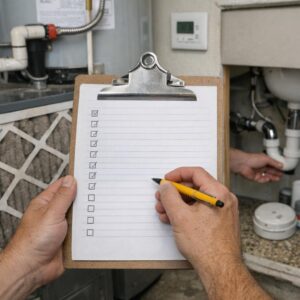
A short inspection route for ordinary weeks
The inspection does not need to include every item during every walkthrough. Begin with areas connected to water, heat, electricity, major appliances, and recent changes.
Utility records
Compare usage, billing dates, weather, rates, and unexplained changes before assuming a device is failing.
Water points
Check toilets, faucets, visible pipes, under-sink areas, appliance hoses, outdoor spigots, and the water heater surroundings.
Air and temperature
Review the HVAC filter, vents, thermostat behavior, condensate area, unusual noise, weak airflow, and rooms with changing comfort.
Appliances
Notice longer cycles, unusual heat, odor, vibration, leakage, damaged seals, blocked airflow, and changing sounds.
Exterior clues
From a safe position, look for overflowing gutters, pooling water, damaged drainage, ceiling stains, peeling finishes, or moisture after rain.
Look for change rather than perfection. A new stain, repeated refill sound, longer drying cycle, unusual odor, or room that suddenly feels different may be more useful than an oversized generic checklist.
Reduce water expenses by finding leaks early
Water waste and water damage are separate expenses
A fixture can increase the bill without visibly damaging the home. A slow hidden leak can damage materials before the bill change becomes obvious.
When no water is being used and all water-consuming equipment is accounted for, compare the meter reading before and after a suitable observation period.
Listen for refilling between flushes, movement inside the tank, weak flushing, and water entering the bowl when the toilet has not been used.
Check the spout, handles, base, cabinet, supply connections, and aerator area rather than focusing only on a visible drip.
Inspect accessible washer, dishwasher, refrigerator, filter, and water-supply connections for moisture, corrosion, bulges, or staining.
Check spigots, hoses, irrigation, and areas that remain unusually wet after watering has stopped.
A simple toilet leak check
EPA WaterSense recommends placing a few drops of food coloring in the toilet tank and waiting about ten minutes without flushing. Color appearing in the bowl may indicate a leak through the flapper or another tank component.
Flush immediately after the test to reduce the chance of staining. Follow the toilet manufacturer’s instructions and obtain assistance when parts, shutoffs, or the source are unclear.
| Water-related sign | Possible explanation | First safe response | Priority |
|---|---|---|---|
| Toilet refills by itself | Tank leak, flapper, chain, fill valve, or water-level issue | Perform a leak test and review the correct replacement part | Act soon |
| Moisture under a sink | Supply connection, drain, fixture seal, splash, or condensation | Dry the area, observe when moisture returns, and protect stored items | Act soon |
| Water meter moves during no-use period | Hidden fixture, appliance, irrigation, or pipe leak | Confirm that no water-consuming system is operating and investigate | Investigate |
| Stain spreads on a ceiling or wall | Plumbing, roof, condensation, drainage, or exterior-water entry | Avoid disturbing wet electrical areas and locate qualified help | High priority |
| Sudden loss of pressure throughout the home | Supply, valve, utility, pipe, or major leak problem | Check utility notices and obtain plumbing assistance | High priority |
| One slow faucet | Aerator buildup, local valve, fixture, or supply issue | Check the removable aerator when the manufacturer permits it | Local check |
Protect heating and cooling expenses without guessing
Inspect, clean, or replace the filter according to the system, filter type, visible condition, household environment, and manufacturer guidance.
Keep appropriate vents and returns clear of furniture, rugs, stored belongings, and heavy dust that restricts normal airflow.
Compare the schedule with actual occupancy and notice frequent overrides, extreme setbacks, short cycling, or a system that cannot reach the setting.
Look for water near indoor cooling equipment, drain pans, pumps, or lines. A blocked or failing drain can create moisture damage.
Unusual noise, refrigerant concerns, combustion problems, weak airflow, repeated shutdowns, electrical faults, and poor performance require diagnosis beyond routine cleaning.
A fixed filter calendar is not correct for every system
Some official guidance recommends frequent inspection during heavy-use seasons, but the appropriate service interval depends on the filter, system, pets, renovation dust, smoke, runtime, and manufacturer instructions.
Replacing a filter too late can restrict airflow. Installing the wrong filter or an unsuitable high-resistance filter can also create problems. Match the equipment rather than buying only by appearance or marketing claims.
Seal obvious air leaks without interfering with the building
Lower-risk starting points
- Replace damaged removable weatherstripping with an appropriate product.
- Adjust or replace a suitable door sweep when a clear gap exists.
- Seal small non-moving gaps with a material approved for the location.
- Check attic access panels, window frames, and utility penetrations from safe locations.
- Use curtains or shades without blocking heaters, vents, or moisture-prone areas.
Review before sealing
- Combustion-air openings
- Bathroom, kitchen, and dryer exhaust
- Crawl-space or attic ventilation
- Drainage and weep openings
- Fire-rated assemblies
- Areas containing moisture damage
- Large gaps connected to structural or installation defects
Do not make the home “airtight” through random sealing
Air sealing can improve comfort and reduce heating or cooling loss, but ventilation, moisture control, exhaust equipment, and fuel-burning appliances must continue operating safely.
A home-energy assessment or qualified building-performance evaluation may be more cost-effective than buying several sealants and treating every visible opening as a defect.
Use appliance maintenance to protect replacement costs
Refrigerator
- Keep the door gasket clean and inspect it for gaps or damage.
- Allow the ventilation clearance required by the manual.
- Clean accessible condenser coils only when the manual recommends it.
- Do not puncture, bend, or disturb refrigerant lines.
- Investigate continuous operation, unusual heat, water, ice buildup, or changing noise.
Clothes dryer
- Clean the lint filter before each use.
- Notice whether clothing takes longer to dry.
- Inspect the accessible vent connection for crushing, disconnection, or lint.
- Check whether the exterior outlet opens appropriately during operation.
- Stop using the dryer when there is overheating, smoke, burning odor, or electrical damage.
Washing machine
- Follow load limits and use the correct cycle.
- Inspect accessible hoses for cracks, bulges, corrosion, or leakage.
- Keep the machine level according to its instructions.
- Use the detergent amount and type approved for the equipment.
- Investigate repeated imbalance, movement, drainage errors, or water beneath the machine.
Dishwasher
- Clean removable filters according to the manual.
- Keep spray-arm openings clear when they are designed for user cleaning.
- Check the door seal, floor edge, supply, and drain areas for leakage.
- Load dishes without preventing normal spray-arm movement.
- Investigate standing water, repeated error codes, overheating, or electrical odor.
Range and oven
- Keep grease and food residue from accumulating near heat sources.
- Maintain ventilation equipment according to its instructions.
- Do not line surfaces or openings with materials not approved by the manufacturer.
- Stop use when flames, ignition, controls, wiring, or gas behavior appears abnormal.
- Use qualified service for gas, electrical, and internal-control repairs.
Water heater
- Keep the required clearance around the equipment.
- Watch for corrosion, water, unusual sound, combustion changes, or repeated loss of hot water.
- Do not adjust, drain, open, or repair unfamiliar components casually.
- Gas, electrical, pressure-relief, venting, and tank problems require suitable expertise.
- Follow the exact manufacturer maintenance schedule.
Longer drying time is not only a convenience problem
Lint restriction, damaged ducting, excessive load size, poor airflow, equipment faults, or unsuitable settings may increase cycle time. The U.S. Fire Administration identifies failure to clean as a leading factor in home dryer fires.
Clean the lint filter before using the dryer, follow the manufacturer’s vent instructions, and arrange service when airflow is weak, the machine overheats, or the problem continues.
Prevent water damage from the ground before climbing anywhere
Observe during or after rain
Look for gutter overflow, downspouts releasing beside the building, pooling near walls, water entering a basement or crawl area, and stains around windows or ceilings.
Keep drainage routes functional
Remove accessible surface debris where it can be done safely and confirm that landscaping, stored objects, or damaged extensions are not redirecting water toward the home.
Document the pattern
Photograph where water appears, note the weather conditions, and record whether the problem occurs during wind-driven rain, heavy storms, irrigation, or snowmelt.
Do not climb onto a roof or unstable ladder to avoid a service charge. Roof edges, high gutters, power lines, wet surfaces, damaged materials, and steep ground can turn a minor maintenance task into a serious injury or larger repair.
Renters and owners have different maintenance responsibilities
Renters can often
- Report leaks, stains, odors, heating problems, pests, and electrical symptoms promptly.
- Photograph the condition and preserve written communication.
- Use permitted removable weatherstripping or draft control.
- Clean accessible filters only when the lease and equipment instructions assign that task.
- Keep vents, appliance access, exits, and utility areas clear.
- Review utility bills and request investigation for unusual changes.
Owners may also need to
- Arrange qualified repair and system service.
- Maintain roofs, exterior drainage, fixed wiring, plumbing, and building systems.
- Plan replacements before emergency failure.
- Review insurance, warranty, permit, and contractor requirements.
- Keep appliance and system records.
- Evaluate whole-home energy and moisture problems rather than isolated symptoms.
Documentation can prevent paying for the same diagnosis twice
Record the date, symptom, utility change, photographs, model number, repair, part used, technician explanation, invoice, and whether the condition returned.
For renters, documentation also creates a clearer maintenance request. For owners, it can help future technicians understand recurring problems and prevent unnecessary replacement of unrelated parts.
Create a simple maintenance expense ledger
| Date | Area or equipment | Observed change | Action taken | Cost | Result and next review |
|---|---|---|---|---|---|
| Example | Hallway toilet | Refilled without being flushed | Leak test confirmed water entering bowl | Record actual amount | Correct part identified; confirm that silent refill has stopped |
| Example | Dryer | Two cycles required for normal load | Lint filter and accessible connection checked | Record actual amount | Service required if airflow or drying time does not improve |
| Example | Bedroom window | Damaged removable weatherstrip | Correct replacement installed | Record actual amount | Check closure, moisture, and comfort during similar weather |
Decide whether to monitor, maintain, repair, or replace
Condition is stable
Use photographs, measurements, bill data, or a dated note when the condition is not active, unsafe, or worsening.
Routine care is due
Clean, inspect, lubricate, drain, adjust, or replace user-serviceable parts only as directed by the manufacturer.
A specific fault is confirmed
Repair is appropriate when the cause is understood, suitable parts are available, and the remaining system is serviceable.
Safety, support, or economics have changed
Replacement may be reasonable after repeated failure, unavailable parts, unsafe condition, extensive damage, or a documented repair-versus-replacement comparison.
False savings that often increase total cost
Tape, sealant, buckets, reset buttons, and repeated cleaning may contain a symptom without correcting a damaged pipe, fitting, seal, motor, drain, or structural opening.
A poor-fitting filter, hose, gasket, electrical component, or appliance part may fail early, restrict operation, leak, or damage related equipment.
A new HVAC unit, dehumidifier, appliance, or window may not correct faulty ductwork, drainage, wiring, ventilation, installation, or hidden moisture.
Electrical, gas, roofing, structural, refrigerant, sewer, and concealed plumbing work can create injury, fire, flooding, code, warranty, and insurance problems.
Replacing usable components too early, applying unnecessary chemicals, or servicing equipment more often than instructed can waste materials and introduce errors.
A breaker, drain, appliance, leak, alarm, or HVAC fault that repeatedly returns needs diagnosis rather than another identical short-term response.
Some warning signs outrank the household budget
Stop the ordinary maintenance plan when a condition could involve fire, gas, electricity, structural instability, contamination, or uncontrolled water.
Electrical danger
Sparks, smoke, repeated breaker trips, shocks, melted outlets, hot electrical components, or burning odors require qualified evaluation.
Active water danger
Water near energized equipment, ceilings holding water, uncontrolled pipe failure, or rapid flooding requires immediate safety action and professional assistance.
Contamination
Sewage backup, flood contamination, extensive mold, chemical spills, or pest-contaminated materials may require trained cleanup.
Structural or exterior danger
Sudden cracks, movement, sagging, damaged roofing, unstable masonry, and unsafe height work should not be treated as beginner maintenance.
If you smell or hear leaking gas, leave the home immediately and contact the gas authority or emergency services from outside. Do not operate lights, phones, appliances, or other electronics before leaving. Carbon monoxide has no smell, so maintain working alarms and respond to every alarm according to its instructions.
Use seasons as reminders, not rigid deadlines
Prepare airflow and drainage
Review filters, vents, thermostat scheduling, indoor-unit drainage, window coverings, outdoor-unit clearance, and professional service needs.
Prepare comfort and safety
Review weatherstripping, heating operation, fuel-burning equipment service, carbon-monoxide alarms, exposed pipes, and safe heater clearance.
Look for new water paths
Check ceilings, windows, exterior drainage, basement or crawl areas, roofline observations from the ground, and appliance exposure to water.
Update the baseline
New occupants, remote work, travel, a baby, a pet, renovation, new equipment, or utility-rate changes can alter normal consumption.
Condition-based maintenance is usually more accurate than one universal calendar. Use the manufacturer’s schedule where one exists, then adjust inspection frequency for climate, runtime, pets, dust, age, occupancy, previous failures, and the consequences of missing a problem.
For a broader inspection routine, use the home maintenance checklist. For heating and cooling costs, continue with the smart versus traditional thermostat comparison.
Quick answers
Which maintenance task is most likely to reduce expenses?
The best first task is the one correcting an active problem: a confirmed leak, restricted airflow, damaged seal, excessive dryer time, or equipment operating abnormally. The answer differs by home.
How often should I inspect the home?
Use a repeatable schedule that reflects the property and risk. High-consequence areas such as active plumbing, dryer lint, alarms, and equipment warning signs need more attention than stable low-use areas.
Does a higher bill mean something is broken?
No. Compare usage, rates, billing period, weather, occupancy, and new equipment. Investigate when the increase is unexplained, repeated, or accompanied by a change in the home.
Should I repair or replace an older appliance?
Compare the confirmed fault, repair cost, safety, parts availability, expected remaining life, operating cost, warranty, installation, and disposal. Age alone does not provide the complete answer.
Can a renter perform these checks?
Renters can usually observe, document, keep access clear, and complete tasks assigned by the lease or manual. Fixed systems, hidden leaks, wiring, gas, structural work, and landlord-owned equipment should be reported rather than altered without permission.
When is a home-energy assessment useful?
It may be useful when bills remain high without a clear cause, comfort differs significantly between rooms, the home has several suspected air leaks, or a major efficiency upgrade is being planned.
Spend first on the problem that is still costing money
Begin with safety, active water, continuous waste, and systems whose failure could damage the home. Compare bills carefully, document changing conditions, and use manufacturer guidance for routine care.
Avoid permanent temporary fixes, incompatible parts, unnecessary early replacement, and risky repairs performed only to avoid professional labor.
Simple maintenance protects the household budget when it is based on a confirmed need, completed safely, and followed long enough to verify that the original problem has actually stopped.
Official maintenance, water, energy, and fire-safety resources
- U.S. EPA WaterSense: Fix a Leak Week
- U.S. Department of Energy: Consumer Guide to Air Sealing the Home
- U.S. Department of Energy: Consumer Guide to Home Energy Assessments
- ENERGY STAR: Heating and Cooling Maintenance Checklist
- ENERGY STAR: Refrigerator Energy-Saving and Maintenance Tips
- U.S. Fire Administration: Appliance, Electrical, and Dryer Fire Safety
- U.S. Consumer Product Safety Commission: Gas, Fire, and Carbon Monoxide Safety
Editorial note: This guide was prepared by the Dona Living Editorial Team for general household education. Utility rates, equipment, building construction, leases, climate, permits, warranties, and maintenance responsibilities vary. Follow manufacturer and local safety instructions, and obtain qualified assistance for electricity, gas, refrigerant, roofing, structural work, concealed plumbing, sewer problems, major water damage, combustion equipment, and other higher-risk conditions.

Dona Living Editorial Team creates practical, well-researched content about home organization, cleaning, décor, and smart living. Our goal is to help readers make everyday life at home simpler, more comfortable, and more efficient through clear guides, realistic ideas, and useful solutions.